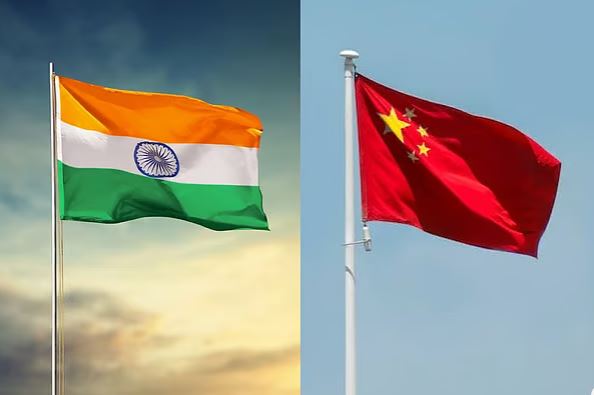
Indian Prime Minister Narendra Modi is on a visit to China, but even during this visit, Donald Trump’s new tariff pressure is weighing on his mind.
From last Wednesday, the tariff on Indian goods, such as diamonds and shrimp, has increased to 50 percent. In Washington’s words, this is the punishment for Delhi not stopping buying oil from Russia.
According to economists, this tariff could take a major hit to India’s export sector. At the same time, India’s ambitious growth targets may also be under threat.
Meanwhile, Chinese President Xi Jinping is also trying to boost the economy, but his plans are also on the verge of collapse due to additional tariffs from the United States.
In this context, the leaders of the world’s two most populous countries may seek new horizons in their relations, although this relationship has been filled with distrust for so long. The main reason for this distrust is the border dispute.
Chatham House researchers Chietig Bajpai and Yu Ji recently wrote, Simply put, this relationship will have an impact on the entire world.
According to them, India would never have become the wall of resistance against China that the West, especially the United States, thought. Therefore, Modi’s visit to China indicates that many things will change.
Both India and China are economically powerful countries. They are the fifth and second largest economies in the world, respectively. According to the IMF, India’s growth will be above 6 percent in the next few years. The country’s economy is already worth $ 4 trillion, and the stock market capitalization has exceeded $ 5 trillion. In total, India will rise to third place by 2028.
Qian Liu, founder and CEO of Beijing-based advisory firm Usawa Advisory, says that the world community has long viewed the US-China relationship as the most important bilateral relationship. Now it is time to look at how the second and third largest economies—China and India—can work together.
However, the relationship is not easy. The long-standing border dispute between the two countries has not yet been resolved. That dispute is essentially a symbol of a wider rivalry. The clash in the Galwan Valley in Ladakh in June 2020 was the bloodiest moment in the last four decades. Its consequences were also mainly economic – the resumption of direct flights was canceled, visas and Chinese investment were blocked. As a result, the pace of infrastructure projects slowed down. India banned more than two hundred Chinese apps, including TikTok.
According to Antoine Levesque, a researcher on South and Central Asia at the International Institute for Strategic Studies, dialogue is essential because India-China relations are key to the stability of the entire Asia. Other powers are also closely monitoring the issue.
Beyond this, there are various sensitive issues, such as Tibet, the Dalai Lama, China’s huge hydroelectric project on the shared river, or the renewed tension after the Pahalgam attack in Pakistan.
Currently, relations with most of India’s neighbors in South Asia are not good. On the other hand, China is the main trading partner of Pakistan, Bangladesh, Sri Lanka and Afghanistan.
According to Priyanka Kishor, chief economist of the research institute Asia Decoded, there does not seem to be any BYD (Chinese car manufacturer) factory in India. However, there may be some small successes.
In the meantime, it has been announced that India-China direct flights will resume. Visa policies may be relaxed, and economic cooperation may also increase.
However, Kishor commented that the Delhi-Beijing relationship is basically uncomfortable. It should be remembered that the United States and India once formed an alliance to create a balance against China. But now India does not understand the position of the United States. Therefore, this step is in line with the concept of a smart and multi-centric world—both India and China support it.
Modi is now going to the Shanghai Cooperation Organization (SCO) meeting. This is basically an alternative regional platform to the Western perspective. The member countries include China, India, Iran, Pakistan and Russia.
However, India has not grasped the importance of this organization much so far. Critics say the SCO has not produced any significant results.
The SCO defense ministers’ meeting in June this year did not produce a joint statement. India objected because it did not mention the horrific April 22 attack on Hindu tourists in Pahelgam, Kashmir, which sparked the biggest conflict between India and Pakistan in decades.
According to experts, the strained relations with Washington are forcing India to reconsider the need for the SCO. China will also want to show solidarity with the developing world amid Trump’s tariff chaos.
On the other hand, the BRICS alliance—of which China and India are members—has also been the target of Trump’s wrath. He has threatened to impose additional tariffs on the alliance’s countries beyond the set rates.
Modi’s last meeting with Xi Jinping and Vladimir Putin was in October 2024, at the BRICS summit in Russia. Last week, Russian embassy officials said Moscow hopes to hold a trilateral meeting between China, India and Russia soon.
Analysts believe that leveraging the three countries’ strengths—China’s manufacturing prowess, India’s services sector and Russia’s natural resources—could reduce dependence on the United States and create new export markets. It could also change the course of global trade.
Delhi is also giving importance to other regional alliances. Modi visited Japan on his way to China.
ASEAN and Japan will definitely want closer cooperation between China and India. This will provide special benefits to the supply chain, and the concept of ‘Make in Asia for Asia’ will also be possible to implement, said Priyanka Kishor.
China-India economic cooperation
India is still dependent on China for production. Raw materials and components come from there. Therefore, India will want import duties to be low.
But according to experts, strict industrial policies have become an obstacle for India. As a result, even though the supply chain has started to move from China, India is getting its benefits, not the Southeast Asian countries.
According to Kishor, there is a big opportunity for partnership, especially in electronics production. He gave an example, saying that Apple is manufacturing various components including AirPods in Vietnam, while iPhones are being manufactured in India. As a result, there is no problem of dual production.
Kishor also said that an easy success for China could be quick visa approval. China wants access to the Indian market – either directly or through investment. Because the US market is shrinking, the ASEAN market is almost full, while in India, numerous Chinese apps like TikTok are banned.
However, the relationship is so complex that it is not possible to change much in one meeting. There is still a long way to go in improving China-India relations. However, Modi’s visit may at least reduce some of the bitterness. At the same time, a clear message will be given to Washington that India has options.
Get real time update about this post category directly on your device, subscribe now.
